

Emergency Car Repair: What to Do When Stranded
Table of Contents
Immediate Safety Steps When Your Car Breaks Down
Emergency Troubleshooting Before You Call for Help
Check the Basics First
Warning Signs That Require Immediate Professional Help
Mobile Engine Diagnostics: Getting to the Root of the Problem
Mobile Brake Repair in Your Area: Why It Matters in Emergencies
Finding a Reliable Emergency Mobile Mechanic
What to Ask Before Approving Work
Mobile Repair vs. Towing to a Shop
Transparent Repair Estimates and What to Expect
Preventing Future Breakdowns: Maintenance Steps That Matter
Frequently Asked Questions
Last Updated: October 12, 2026
Immediate Safety Steps When Your Car Breaks Down
Your car stops on the highway. Your heart rate spikes. The first few minutes determine whether you stay safe or end up in real danger.
The moment your vehicle fails, your priority is protection. Turn on your hazard lights immediately. If you're on a busy road, steer toward the shoulder or a safe area away from traffic. Stop the engine.
Stay inside your vehicle if you're on a highway. If you're on a quiet street and it's daylight, stepping out is safer. Keep your phone accessible. Have your location ready before you call for help.

If another vehicle approaches, don't wave them down. Stay calm and visible. Turn your interior light on if it's dark. Open your hood to signal that you need assistance.
The difference between a minor inconvenience and a serious accident often comes down to those first 60 seconds.
Emergency Troubleshooting Before You Call for Help
Not every car breakdown requires professional help immediately. Some issues you can diagnose and sometimes fix yourself before calling for a mobile mechanic. This saves time and money, especially if the problem is simple.
Check the Basics First
Start with the obvious. Is your engine actually off, or did it stall? Turn the key and listen. Does the engine crank but not start, or is there nothing at all? A dead battery sounds like rapid clicking.
Check your dashboard lights. A flashing check engine light means your vehicle's computer detected a fault. A red oil pressure light means you're low on oil or have an oil circulation problem. A temperature gauge in the red zone means overheating.
Pop your hood. Look for obvious problems: loose battery cables, visible leaks, disconnected hoses. A battery terminal corroded white or blue around the connection is a common culprit. Tighten it by hand if you can. Smell for burning rubber or fuel.
Try the basics: Is the fuel door stuck? Did you run out of gas? Is the parking brake engaged? These sound silly, but emergency mobile mechanics respond to them constantly. It takes 30 seconds to verify. If none of these apply, move to the next step.
Warning Signs That Require Immediate Professional Help
Some symptoms mean stop immediately and call for professional help. Do not attempt to drive.
Smoke or flames from under the hood mean fire risk. Stop, exit the vehicle, and call emergency services. Do not open the hood. A grinding noise when you turn the steering wheel suggests suspension or brake damage. Pulling hard to one side during braking indicates brake failure.
If your brakes feel spongy, or if you have to pump them repeatedly to stop, you have a brake system failure. This is dangerous. Do not drive. Call for emergency mobile brake repair immediately. If your vehicle is overheating and the temperature gauge stays in the red, pull over and let it cool.
Fluid leaking in large quantities under your vehicle is a warning sign. Small drips might be condensation from your air conditioning. Puddles under your car mean a problem with your cooling system, transmission, or hydraulic fluid. The color matters: clear or slightly green is coolant, red is transmission fluid, dark brown is engine oil.
Mobile Engine Diagnostics: Getting to the Root of the Problem
Your engine warning light is on. Your car won't start. You hear a noise you've never heard before. Without proper diagnostics, you're guessing. With diagnostics, you know exactly what's wrong.
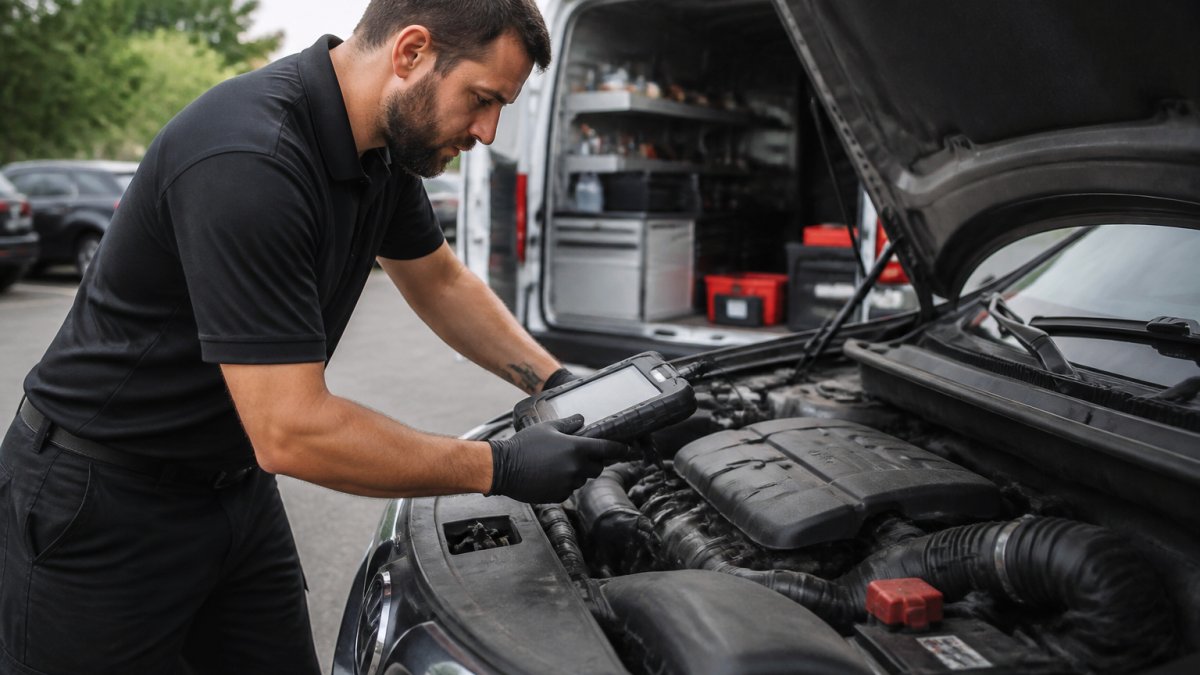
Mobile engine diagnostics means a certified mechanic comes to your location with specialized equipment to read your vehicle's computer. Modern cars have hundreds of sensors. When something goes wrong, the engine control unit logs a code.
A proper diagnostic scan pulls these codes and explains what they mean. A "P0420" code means your catalytic converter isn't working properly. A "P0171" code means your fuel system is running too lean.
Leaders Racing uses mobile engine diagnostics to identify problems before recommending repairs. This transparency is why customers trust us. You're not paying for guesswork. You're paying for answers.
The technician connects a scanner to your vehicle's OBD-II port, usually located under the steering column. The scanner reads fault codes stored in your engine's computer.
Some codes are critical. Others are informational. A technician who doesn't explain the difference is either inexperienced or trying to upsell you.
Mobile Brake Repair in Your Area: Why It Matters in Emergencies
Your brakes are the most critical safety system in your vehicle. When they fail, nothing else matters. Mobile brake repair means a technician arrives at your location and fixes the problem without you having to tow your car.
Brake problems announce themselves. Squealing usually means your brake pads are worn and metal-on-metal contact is starting. Grinding means your pads are gone and your rotors are damaged.
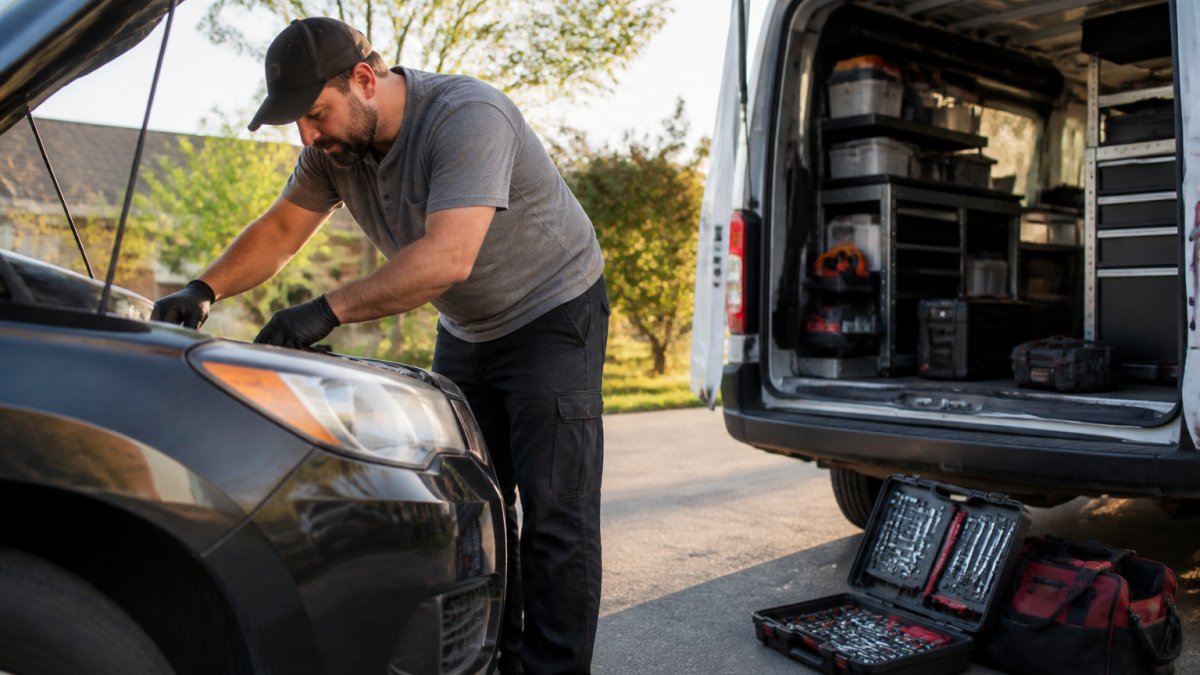
Mobile brake repair addresses these issues on-site. A technician can replace brake pads, resurface or replace rotors, bleed brake lines to remove air, and replace hydraulic fluid. You stay at home or at your office.
The cost of brake repair varies based on what's damaged. But the alternative is driving on failed brakes, which risks your life and the lives of others on the road.
Leaders Racing specializes in mobile brake repair because brakes are too important to delay. If your brakes are failing and you're stranded, we come to you. We diagnose the problem, explain what needs to happen, and fix it right there.
Finding a Reliable Emergency Mobile Mechanic
Not all mobile mechanics are equal. Some are experienced technicians working independently. Others are less experienced and looking for quick cash. The difference between the two can cost you thousands in unnecessary repairs or poor workmanship.
When you're stranded and need help, you don't have time for a lengthy vetting process. But you still need to ask the right questions before you approve any work.
What to Ask Before Approving Work
Ask for credentials first. A licensed mechanic has training and accountability. Ask how long they've been in business. A technician with 10 years of experience has seen more problems than someone with one year. Ask if they're insured.
Ask for a detailed estimate in writing before work begins. A vague estimate like "around $500" is not acceptable. You need to know exactly what's being replaced, what's being repaired, and what the labor cost is.
Ask about warranty. Reputable mobile mechanics warranty their work. A business that won't warranty work is telling you they're not confident in their quality.
Ask if they'll provide a second opinion. If they refuse to let you get a second opinion before major work, that's a red flag. A confident technician welcomes verification. A dishonest one doesn't.
Ask about their process for emergency repairs. Do they stock common parts, or do they need to order? How long will the repair take? Can you wait, or do you need a loaner vehicle? These details matter when you're stranded.
Mobile Repair vs. Towing to a Shop
When your car breaks down, you have two choices: call a mobile mechanic or call a tow truck. Each has advantages and drawbacks.
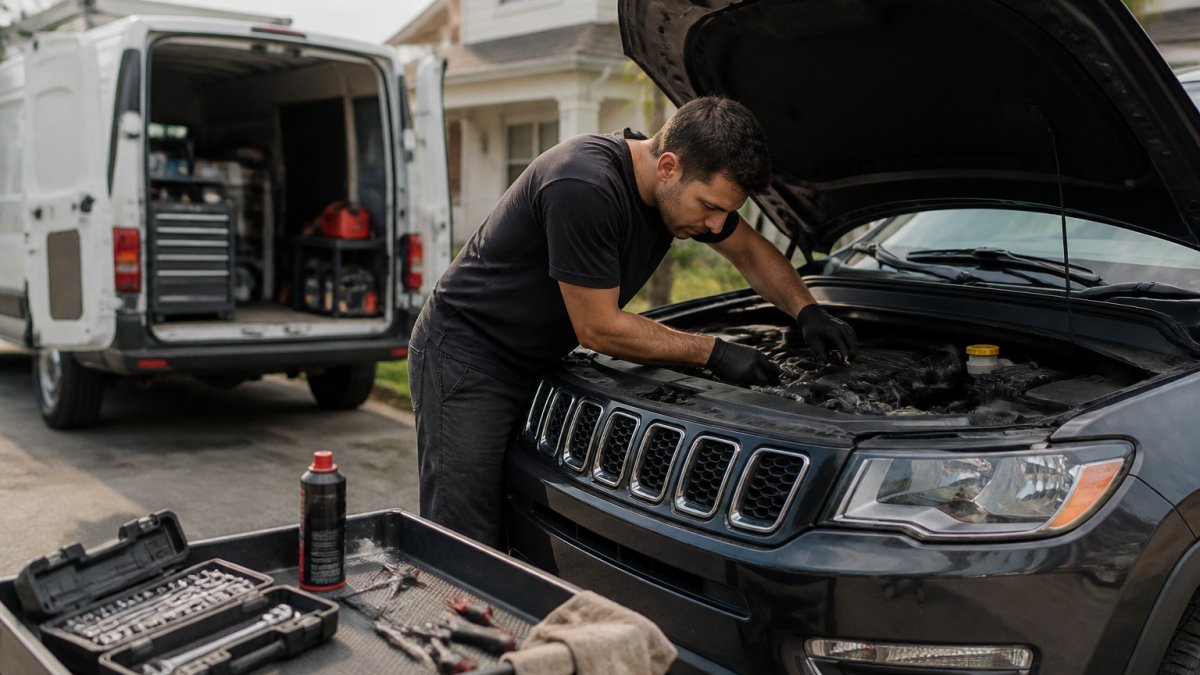
Mobile repair saves time and money. The mechanic comes to you. You don't pay for towing. Repairs happen faster because there's no transport delay. The mechanic can often start work immediately. If the repair is simple, you're back on the road in hours, not days.
Towing to a shop makes sense for complex repairs. If your transmission needs rebuilding or your engine needs major work, a shop with a lift and specialized equipment is better equipped. Some repairs require a vehicle to be on a lift. Some require specialized diagnostic equipment that mobile mechanics don't carry.
The deciding factor is the type of repair. Brake work, oil changes, suspension issues, battery replacement, alternator replacement, and most electrical repairs can be done mobile. Engine rebuilds, transmission rebuilds, and complex diagnostic work often require a shop.
Leaders Racing handles emergency mobile repair for issues that don't require a lift or specialized shop equipment.
Transparent Repair Estimates and What to Expect
One of the biggest complaints about automotive repair is surprise costs. You approve a $300 repair and get a bill for $600. This happens because the initial estimate was incomplete or because additional problems were discovered during work.
A transparent repair estimate tells you exactly what you're paying for. It lists every part being replaced, the cost of each part, and the labor cost. It specifies how long the repair should take.
When a technician discovers additional problems during repair, they should stop and call you. They should explain what they found, why it needs repair, and what it will cost. You then decide whether to approve the additional work.
Ask your mobile mechanic how they handle discoveries. Do they call you immediately, or do they complete the work and surprise you with a larger bill? The answer tells you everything about their integrity.
Leaders Racing provides estimates that are honest and complete. If we discover additional problems, we call you before proceeding. We explain what we found and why it matters. You make the decision.
Preventing Future Breakdowns: Maintenance Steps That Matter
The best emergency car repair is the one you never need. Prevention through regular maintenance stops most breakdowns before they happen.
Your vehicle's manufacturer recommends a maintenance schedule. Follow it. Oil changes every 3,000 to 7,500 miles depending on your vehicle and oil type. Brake inspections annually. Tire rotations every 6,000 miles. Battery testing annually. Coolant flushes every 30,000 to 50,000 miles. Transmission fluid checks regularly.
These aren't suggestions. They're the difference between a vehicle that runs reliably and one that breaks down on the highway. Each maintenance task prevents specific failures. Oil changes prevent engine damage. Brake inspections catch worn pads before they damage rotors.
Keep records of all maintenance. When you sell your vehicle, maintenance records prove you cared for it. When you need warranty work, records prove you followed the manufacturer's recommendations.
Many vehicle owners skip maintenance to save money. They pay for it later with emergency repairs that cost ten times more. A $100 oil change prevents a $3,000 engine repair. A $50 brake inspection prevents a $1,500 brake system replacement.
Frequently Asked Questions
What should I do immediately if my car breaks down on the road?
First, turn on your hazard lights and safely pull to the shoulder as far from traffic as possible. If you're on a highway, exit at the nearest safe location. Turn off the engine, set the parking brake, and stay inside the vehicle with your seatbelt on if traffic is heavy. Call for help and provide your exact location. Avoid attempting repairs near moving traffic. If you must exit the vehicle, wear a safety vest if available and stay well away from the roadway.
How much does an emergency mobile mechanic diagnostic typically cost?
Diagnostic pricing depends on the complexity of your vehicle's issue, the time required, and the mechanic's service area. Contact us directly for a quote. We offer transparent estimates before work begins, so you know the full cost upfront. Ask about diagnostic fees and whether that cost applies toward repairs if you proceed.
Can a mobile mechanic handle brake repair at my location?
Yes, mobile brake repair is one of the most common emergency services. A qualified mobile mechanic can diagnose brake issues, replace pads, service the brake fluid, and handle other brake work on-site at your home or office. This is faster and more convenient than towing to a shop, especially for urgent situations. Verify that the mechanic is licensed and insured before approving any brake work.
How do I know if a mobile mechanic is licensed and trustworthy?
Ask for proof of licensing, insurance, and certifications before work begins. A reputable mobile mechanic will provide this information willingly. Check online reviews from past customers and ask about their warranty on repairs. Trustworthy mechanics explain what's wrong with your vehicle clearly, provide written estimates, and won't pressure you into unnecessary repairs. If a mechanic recommends expensive work without clear explanation, get a second opinion.
When your car breaks down unexpectedly, you need a mechanic you can trust immediately. Leaders Racing provides 24/7 mobile emergency car repair in your area, with transparent diagnostics, honest estimates, and brake repair expertise. We come to you, diagnose the problem accurately, and fix it right the first time without unnecessary upselling. Contact us today for reliable emergency automotive service that gets you back on the road safely.
Contact Us
Comments