

Why Mobile Mechanics Are Cheaper: Cost Breakdown
Table of Contents
Why Mobile Mechanics Are Cheaper: The Cost Advantage
How Overhead Costs Drive the Price Difference
Mobile Mechanic vs Repair Shop: A Direct Comparison
Mobile Mechanic Cost and Service Fee Structure
Understanding the Mobile Mechanic Service Fee
What Repairs Can a Mobile Mechanic Do
How to Verify a Mobile Mechanic and Avoid Overcharging
When a Traditional Garage May Be the Better Value
Frequently Asked Questions
Last Updated: October 14, 2026
Why Mobile Mechanics Are Cheaper: The Cost Advantage
When your car breaks down, you face a choice: take it to a traditional repair shop or call a mobile mechanic. Most vehicle owners assume the mobile option costs more because someone comes to them. The reality is the opposite, why mobile mechanics are cheaper comes down to dramatically lower overhead costs. This guide breaks down exactly why that happens and helps you understand when each option makes financial sense.
The difference comes down to one simple fact: running a repair shop is expensive. A traditional garage needs a physical location, which means rent, utilities, insurance on the building, and a full staff working set hours. A mobile mechanic eliminates most of those costs. No storefront. No waiting room. No expensive equipment that sits idle between jobs. That efficiency translates directly to lower prices for you.
Pro Tip The best time to call a mobile mechanic is when you need routine maintenance, brake work, or diagnostic services. These jobs don't require a full shop's specialized equipment.
How Overhead Costs Drive the Price Difference
Overhead is the enemy of affordable service. A traditional repair shop operates with substantial fixed costs that exist whether the bays are full or empty. Rent for a 5,000-square-foot facility runs hundreds to thousands of dollars monthly. Utilities, property taxes, insurance, and maintenance of that building add more.
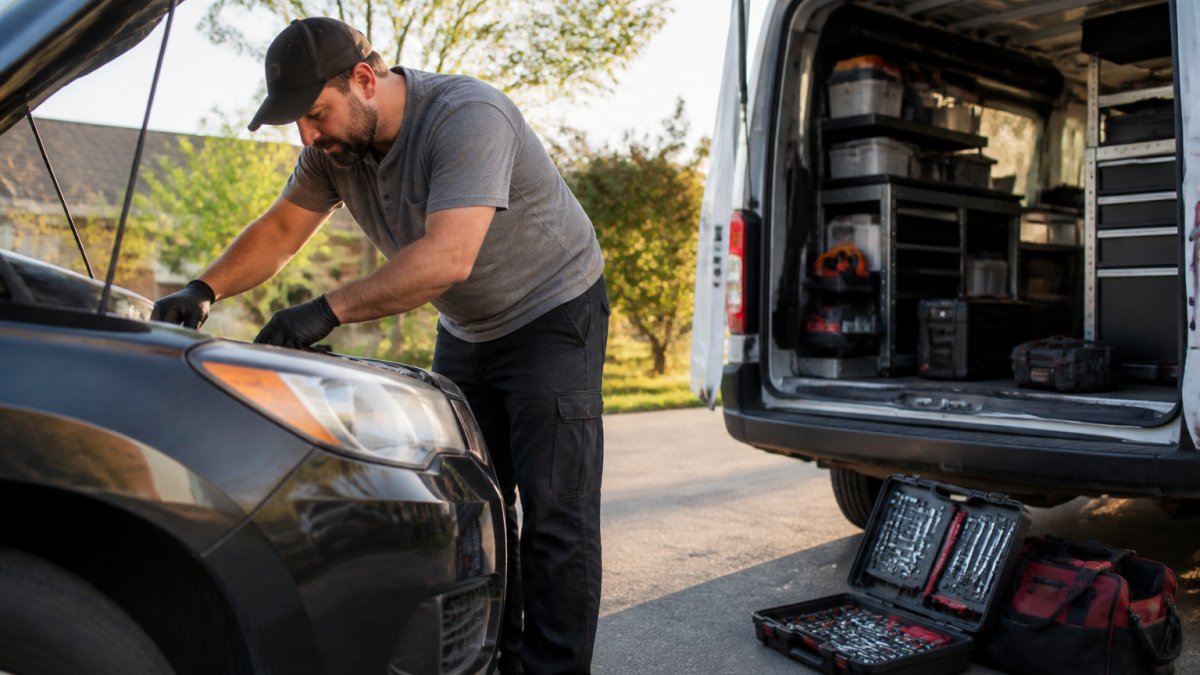
Mobile mechanics avoid nearly all of this. They work from a van or truck, eliminating rent and utility costs entirely. They operate independently or in small teams, reducing administrative overhead. Insurance costs are lower because they're not maintaining a physical facility. The result is a business model with 30-50% lower operating expenses than a traditional shop.

Consider the numbers behind each cost category. A shop owner pays rent, utilities, property taxes, and maintenance on their building. A mobile mechanic pays for fuel and vehicle upkeep. A shop needs multiple employees with benefits and payroll taxes. A mobile mechanic might work solo or with one assistant. These structural differences mean mobile mechanics can charge 15-25% less and still maintain healthy margins.
The business model also affects how mechanics spend their time. A shop technician might spend 20% of their day on administrative tasks, waiting between jobs, or handling customer check-in. A mobile mechanic travels to the customer and works immediately. That efficiency compounds across dozens of jobs per month.
Key Takeaway Mobile mechanics pass overhead savings directly to customers. Lower business costs equal lower service prices, not higher profits.
Mobile Mechanic vs Repair Shop: A Direct Comparison
Both options have genuine advantages and real limitations. Understanding the trade-offs helps you choose the right service for each repair need.
Factor | Mobile Mechanic | Traditional Repair Shop |
Service Price | 15-25% lower | Higher due to overhead |
Convenience | Comes to you | You drive to them |
Appointment Flexibility | Often evenings/weekends | Limited to business hours |
Equipment Access | Basic to intermediate tools | Full diagnostic equipment |
Repair Complexity | Routine, brake, suspension, diagnostics | All types including engine rebuilds |
Wait Time | Minimal | Often multi-day wait |
Warranty Coverage | Varies by provider | Typically 12-24 months |
Mobile mechanics excel at convenience and affordability. You don't waste time driving, waiting in a lobby, or rearranging your schedule. The mechanic comes when it suits you. For routine maintenance, brake work, suspension repairs, and basic diagnostics, this model saves money and time.
Traditional shops remain necessary for complex work. Major engine repairs, transmission rebuilds, and specialized diagnostics sometimes require equipment a mobile mechanic can't transport. If your vehicle needs work that takes multiple days, a shop's facility is more efficient. Warranty coverage also tends to be more comprehensive at established shops.
The real distinction isn't which is "better." It's which fits your specific repair. A brake pad replacement? Mobile mechanic wins on price and convenience. A transmission rebuild? Traditional shop is necessary.
Mobile Mechanic Cost and Service Fee Structure
Understanding how mobile mechanics price their work helps you anticipate costs and avoid surprises. Most mobile mechanics charge in three ways: a service fee, labor rates, and parts cost.
The service fee (sometimes called a call-out fee or travel fee) covers the mechanic's time getting to your location. This typically ranges from zero to a modest amount depending on distance. Some mechanics waive it if you proceed with repairs. Others include it as part of the diagnostic fee.
Labor rates for mobile mechanics generally run 20-30% lower than shop rates. A traditional shop might charge $100-150 per hour for labor. A mobile mechanic typically charges $70-110 per hour. That difference reflects the lower overhead structure discussed earlier.
Parts cost is where mobile mechanics and shops converge. Both source parts from the same suppliers, so a brake rotor costs roughly the same regardless of where you buy it. Some mobile mechanics mark up parts slightly; others pass through supplier costs directly. Always ask whether the quoted price includes parts markup.
Watch Out Watch for mechanics who quote labor without specifying parts cost. A complete estimate should show labor, parts, and any service fees separately. Transparency prevents sticker shock.
Understanding the Mobile Mechanic Service Fee
The service fee is where confusion often starts. Some mobile mechanics charge it; others don't. Understanding what it covers helps you evaluate whether the total cost is truly cheaper.
A service fee typically covers travel time and fuel to reach your location. If you live 5 miles from the mechanic's home base, the fee is lower than if you live 20 miles away. Some mechanics charge a flat fee ($25-50); others calculate it based on distance.
The key question: does the service fee disappear if you approve the repair? Many mobile mechanics credit the service fee against the final bill if work proceeds. This means you're not paying extra; you're paying for the mechanic's time to diagnose and travel. If the mechanic finds nothing wrong, you might owe the service fee. If you approve repairs, it gets absorbed into the total cost.
Compare the total cost, not just the hourly rate. A mobile mechanic charging $85 per hour with no service fee might cost less than a shop charging $110 per hour with no travel charge. But a mobile mechanic charging $90 per hour plus a $50 service fee could exceed a shop's total if the job takes only 30 minutes.
What Repairs Can a Mobile Mechanic Do
Not every repair suits a mobile environment. Understanding which jobs mobile mechanics handle well prevents wasted trips and disappointment.
Mobile mechanics typically excel at:
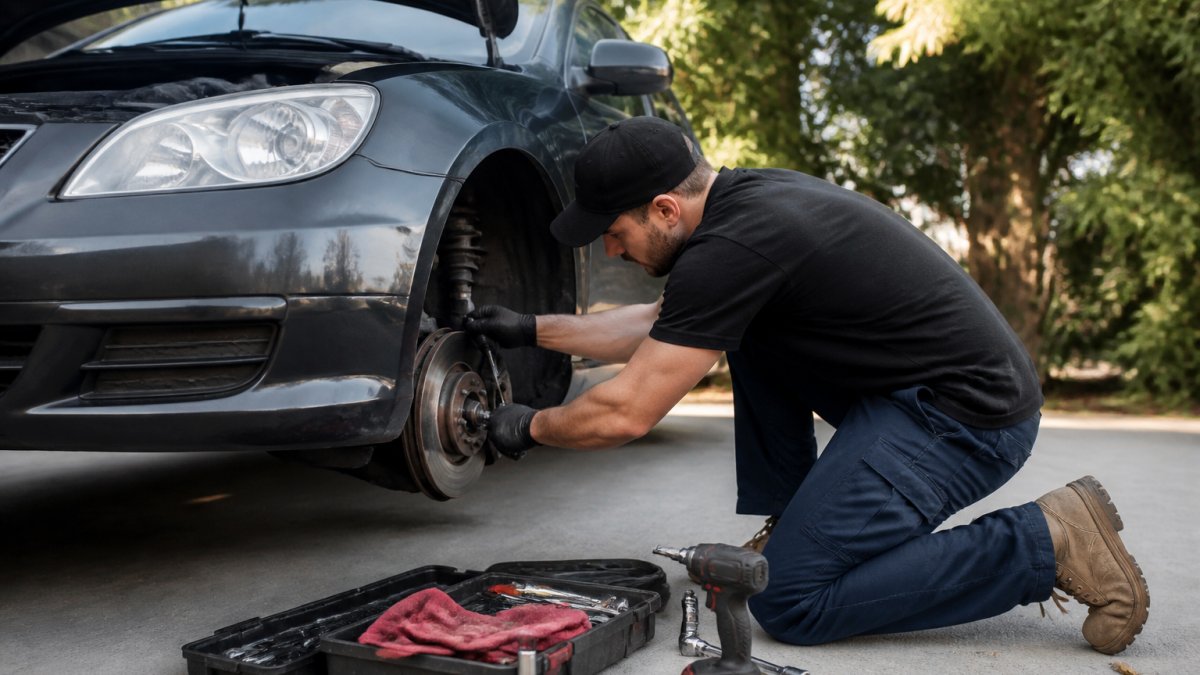
Brake service (pads, rotors, fluid)
Suspension work (shocks, struts, springs)
Oil changes and fluid maintenance
Battery replacement
Starter and alternator work
Basic engine diagnostics
Tire service and rotation
Electrical repairs (lights, switches, sensors)
Hose and belt replacement
These jobs share common traits: they don't require specialized equipment, they complete in a few hours or less, and they don't need a lift bay or compressed air systems.
Jobs that typically require a traditional shop:
Transmission rebuilds
Engine overhauls
Major welding work
Alignment (requires specialized equipment)
Complex electrical diagnostics
Air conditioning system work (some shops)
Collision repairs
Paint work
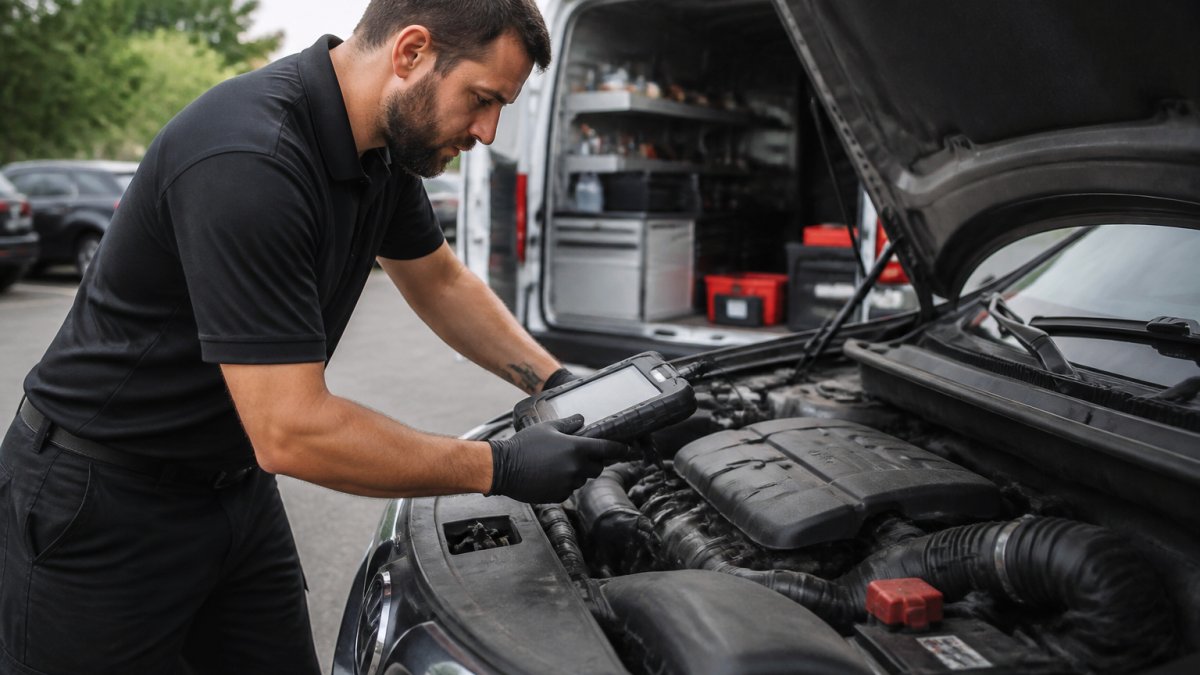
The distinction hinges on equipment and time. A mobile mechanic can diagnose why your check engine light is on. They can often fix the underlying issue if it's a sensor, wire, or simple component. If the repair requires hours of work or specialized diagnostic equipment, a shop becomes necessary.
Leaders Racing specializes in brakes, suspension, emergency repairs, and engine diagnostics. These are the repairs that benefit most from mobile convenience and competitive pricing.
How to Verify a Mobile Mechanic and Avoid Overcharging
This is where customer concerns peak. How do you know a mobile mechanic won't recommend unnecessary repairs or overcharge you? The answer lies in verification and transparency.
Start with credentials. A legitimate mobile mechanic should be licensed and insured. Ask for proof of both. In most states, mechanics need a valid driver's license and business license. Insurance protects you if something goes wrong during the repair. A mechanic who hesitates to show credentials is a red flag.
Check reviews on independent platforms. Google, Yelp, and the Better Business Bureau show patterns in customer experience. One negative review happens to anyone. Multiple complaints about overcharging or unreliability indicate a real problem.
Ask about diagnostic fees upfront. A reputable mechanic will quote a diagnostic fee before starting work. This fee should be reasonable (typically $50-100) and should be credited toward repairs if you approve them. Avoid mechanics who charge diagnostic fees and then pressure you into unnecessary work.
Request a written estimate before work begins. The estimate should itemize labor, parts, and any service fees. This protects both you and the mechanic. You know exactly what you're paying for. The mechanic has a record of what they agreed to do.
Pro Tip Ask the mechanic to explain what they found and why it needs repair. A trustworthy mechanic welcomes questions and explains their reasoning. If they rush through explanations or get defensive, that's a warning sign.
Leaders Racing's commitment to honesty and transparency directly addresses this concern. We provide detailed estimates, explain findings clearly, and avoid recommending unnecessary repairs. Rated 5 stars by our customers.
When a Traditional Garage May Be the Better Value
Mobile mechanics offer clear advantages for most common repairs, but traditional garages remain the better choice in specific situations.
Choose a traditional shop when the job is complex or time-intensive. A transmission rebuild, engine overhaul, or major electrical diagnostic requires equipment and space a mobile mechanic can't provide. Rushing this work at your home creates risk. A proper shop environment with lifts, diagnostic computers, and parts inventory ensures quality.
Choose a shop when warranty matters. Many traditional garages offer 12-24 month warranties on labor and parts. Mobile mechanics often offer shorter warranties or none at all. If you need peace of mind that repairs are covered if problems emerge, a shop's warranty is valuable.
Choose a shop if you need multiple repairs done simultaneously. If your vehicle needs brake work, suspension repairs, and electrical diagnostics, coordinating multiple mobile mechanic visits becomes inefficient. A shop can handle all three in one visit.
Choose a shop for scheduled maintenance if you prefer routine oversight. Some vehicle owners benefit from a shop's systematic approach to maintenance schedules. A shop tracks your vehicle's history and recommends preventive work based on mileage. Mobile mechanics typically handle immediate issues rather than long-term maintenance planning.
The cost advantage of mobile mechanics is real, but it's not universal. The best choice depends on your specific repair, your vehicle's condition, and your priorities. For routine maintenance, brake work, suspension repairs, and diagnostics, mobile mechanics deliver better value.
Choosing between a mobile mechanic and a traditional shop doesn't have to mean sacrificing quality for savings. We specialize in brakes, suspension, emergency repairs, and engine diagnostics, the work where mobile service saves you the most money. Contact us today to schedule your next repair and experience the difference that honest, transparent service makes.
Frequently Asked Questions
Are mobile mechanics cheaper than repair shops?
Mobile mechanics are often cheaper because they eliminate overhead costs like rent, utilities, and staffing for a physical facility. However, pricing varies by repair type and location. Simple diagnostics and routine maintenance tend to cost less with mobile service, while complex repairs requiring specialized equipment may be comparable or higher. Always request an estimate before committing to any repair.
Do mobile mechanics charge a service or travel fee?
Many mobile mechanics charge a call-out fee or travel fee to cover transportation and time spent reaching your location. This fee typically ranges from $30 to $100 depending on distance and local market rates. Some mobile mechanics include this fee in their labor rate, while others itemize it separately. Always ask about travel fees upfront when scheduling an appointment.
What repairs can a mobile mechanic do at home?
Mobile mechanics can handle diagnostics, brake service, suspension work, battery replacement, fluid changes, spark plugs, belts, hoses, and minor engine repairs. They cannot perform major engine rebuilds, transmission overhauls, or work requiring a lift or specialized equipment they cannot transport. Ask your mechanic what services they offer before scheduling, reliable mobile mechanics are transparent about their limitations.
How do I know a mobile mechanic won't recommend unnecessary repairs?
Request an itemized estimate in writing before work begins. Ask for a breakdown of parts and labor costs separately. If the quote seems high, you have the right to get a second opinion without paying another diagnostic fee, reputable mobile mechanics understand this. Check their licensing, insurance, and customer reviews. Mechanics committed to transparency will answer your questions directly and explain why each repair is necessary.
Contact Us
Comments