

Mobile Diagnostic Services for Commuters: A How-To Guide
Table of Contents
What Mobile Diagnostic Services Offer Commuters
Understanding Mobile Check Engine Light Diagnosis
Scheduling a Mobile Mechanic Diagnostic Appointment
What to Expect During Mobile Brake Inspection
Preparing for Your Mobile Diagnostic Visit
Cost, Insurance, and Payment Options
Choosing a Reliable Mobile Diagnostic Provider
Frequently Asked Questions
Last Updated: October 16, 2026
What Mobile Diagnostic Services Offer Commuters
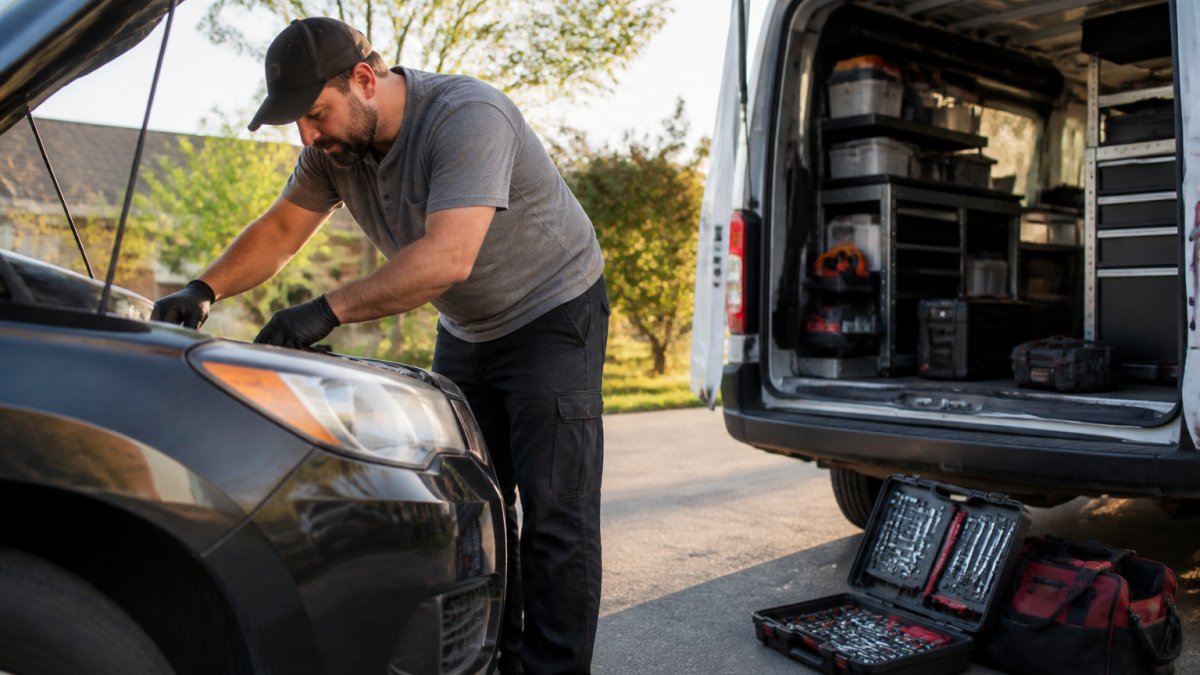
Mobile diagnostic services for commuters bring professional vehicle diagnostics directly to your home or office. No need to take time off work or arrange transportation. A certified technician arrives at your location with diagnostic equipment and performs comprehensive testing on-site.
For busy professionals juggling work schedules, family commitments, and unpredictable commutes, this convenience matters. You stay in control of your time. The diagnostic happens when it works for you, not when a repair shop has an opening three weeks out.
Mobile diagnostic services typically include engine diagnostics, brake system inspections, electrical testing, and suspension evaluations. The range of services available depends on the provider's equipment and certifications.
At Leaders Racing, we understand that your vehicle is essential to your daily routine. A breakdown or warning light can derail your entire week. That's why we bring professional diagnostics to you, eliminating the hassle of dropping off your car and waiting for results.
Pro Tip Request a mobile diagnostic appointment during your lunch break or early evening. Most providers offer flexible scheduling that fits working professionals' needs.
Understanding Mobile Check Engine Light Diagnosis
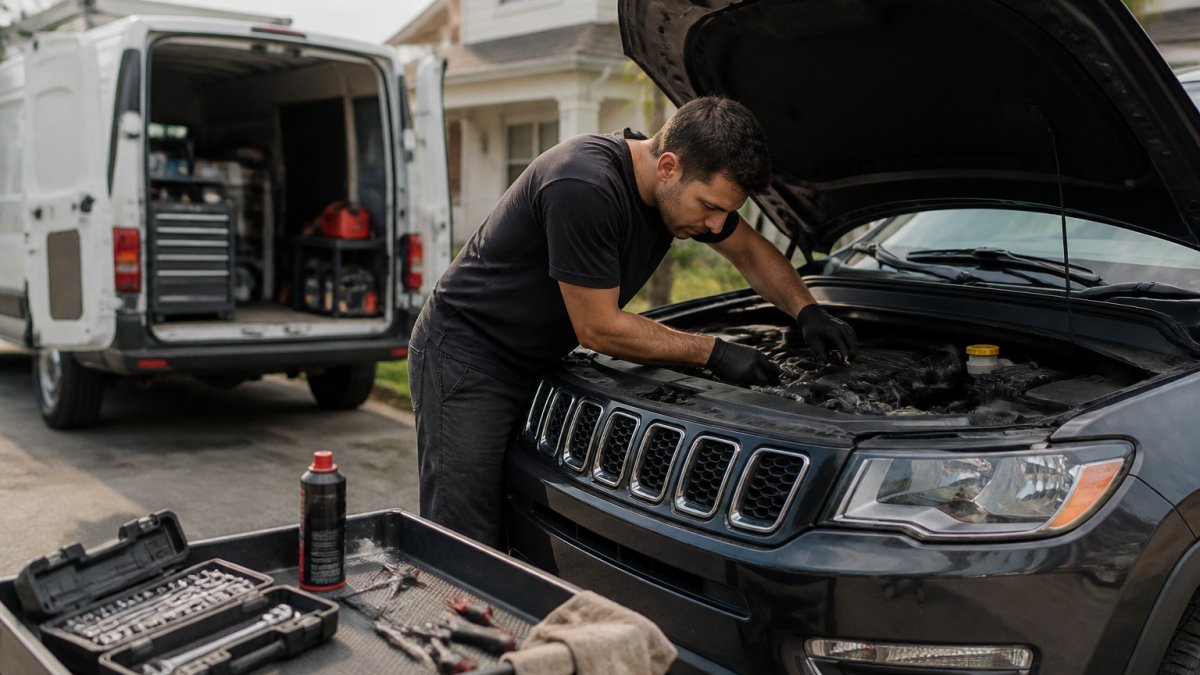
Your check engine light signals a problem, but you don't need to guess what it is. Mobile check engine light diagnosis uses specialized scanner equipment to read your vehicle's onboard diagnostic system and identify the exact issue.
The scanner connects to your vehicle's computer and retrieves diagnostic trouble codes. These codes pinpoint whether the problem is a faulty oxygen sensor, a loose gas cap, a catalytic converter issue, or something more serious. Without this diagnosis, you're flying blind.
Many commuters avoid the dealership diagnostic fee because it feels expensive for uncertain results. With mobile check engine light diagnosis, you get answers at your location. The technician explains findings in plain language, not technical jargon. You understand what's wrong and what repair options exist.
Common check engine light triggers include:
Faulty oxygen sensors
Loose or damaged gas caps
Catalytic converter problems
Ignition coil failures
Mass airflow sensor issues
A proper diagnosis prevents unnecessary repairs. You won't pay to replace parts that aren't broken. This honesty and transparency is what separates trustworthy mobile diagnostic services from shops that pad invoices.

Watch Out Ignoring a check engine light can lead to more expensive repairs down the road. Get it diagnosed promptly to catch small issues before they become major problems.
Scheduling a Mobile Mechanic Diagnostic Appointment
Booking a mobile mechanic diagnostic appointment is straightforward, but commuters have a scheduling problem most service pages ignore: the vehicle has to be parked somewhere the technician can legally and safely work on it, and you have to be reachable while the diagnostic runs.
Start by deciding which of those three locations you can realistically offer. A residential driveway is the easiest. An office parking garage works if the provider confirms clearance height and allows work on the property. A commuter lot is the hardest, because many are owned by a transit authority or municipality and prohibit commercial repair work.
When you contact the provider, give them four things in one message so you do not trade calls all day:
Year, make, model, and current mileage
The symptom in plain language ("check engine light came on Tuesday, car idles rough at stoplights")
The exact address and a note about parking (garage, driveway, street, lot)
Two or three time windows that fit your commute
Most mobile diagnostic providers offer early morning, evening, and weekend slots specifically because their customers work. Ask directly whether the technician can arrive before 7 a.m. or after 6 p.m.
Before the appointment, clear a parking space where the technician can safely access the vehicle from all sides. If your car will not start or move under its own power, say so when booking.
When the technician arrives, walk them through what you have noticed: unusual noises, warning lights, performance changes, or safety concerns. The more specific you are about when a symptom appears, cold start, highway speed, braking, idling, the faster the diagnosis goes.
Most mobile diagnostic appointments take 30 to 60 minutes depending on complexity. Reading a check engine light code and pulling live data usually takes 15 to 20 minutes. A full brake or suspension inspection takes longer, and a diagnostic that requires a road test adds time because the technician has to drive the vehicle.
Pro Tip If you are booking around a train or bus schedule, ask the provider to text you when the technician is 20 to 30 minutes out. That gives you enough notice to step outside without missing your ride.
Key Takeaway Book the location first, then the time. A provider who can work in your office garage at 7 a.m. is more useful to a commuter than one who only offers driveway service at 10 a.m.
What to Expect During Mobile Brake Inspection
A mobile brake inspection examines your entire braking system: pads, rotors, calipers, brake fluid, and lines. The technician checks for wear, damage, leaks, and performance issues.
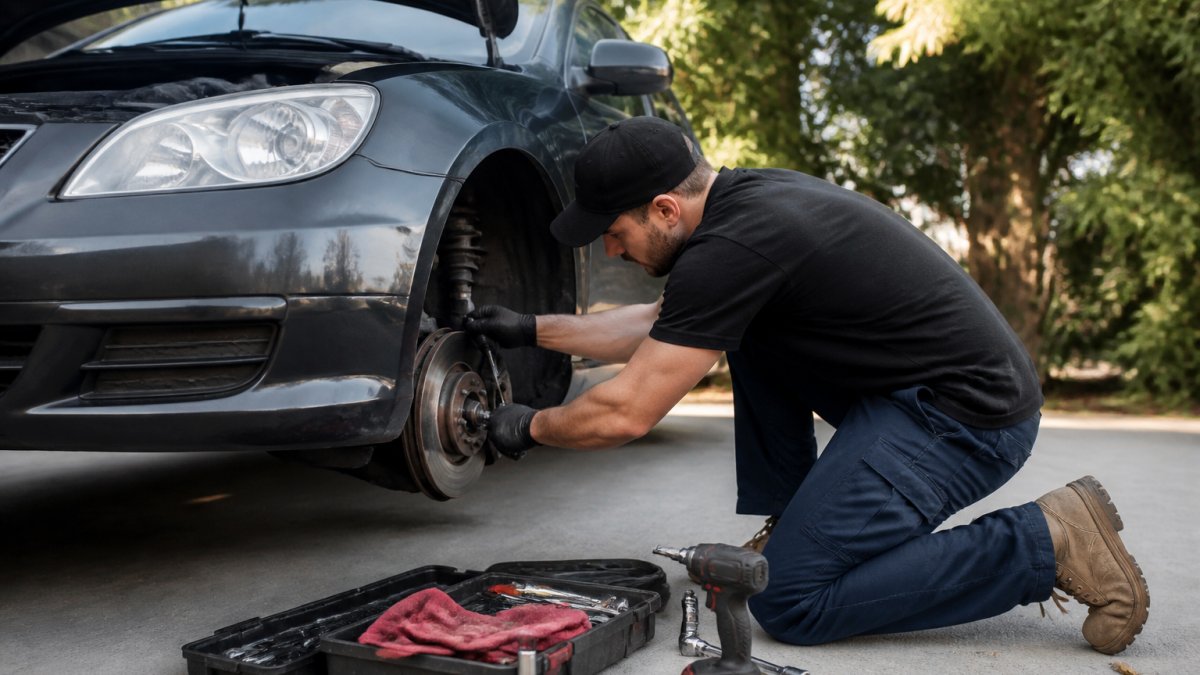
The inspection typically begins with a visual examination of wheel components. The technician removes wheels to inspect brake pad thickness and rotor condition. Worn pads indicate imminent brake failure. Scored or warped rotors reduce braking effectiveness and safety.
Brake fluid is tested for contamination and moisture. Old fluid absorbs water over time, which reduces braking power and can cause corrosion inside brake lines.
A soft pedal, grinding noise, or pulling to one side signals problems. These symptoms require repair before you continue driving.
Common mobile brake inspection findings include:
Worn brake pads requiring replacement
Rotor damage or warping
Brake fluid contamination
Caliper sticking or damage
Brake line corrosion or leaks
A professional brake inspection protects you and your passengers. Brake failure on a busy commute creates dangerous situations. Catching problems early prevents accidents and expensive emergency repairs.
Preparing for Your Mobile Diagnostic Visit
Prepare your vehicle and space before the technician arrives. Move parked vehicles to clear adequate workspace. Remove personal items from your car's interior if the technician needs to access the cabin for electrical or computer diagnostics.
Write down any symptoms or concerns you've noticed. Include when problems started, how often they occur, and what triggers them. Bring your vehicle's maintenance records if available. Previous repair history helps the technician understand your vehicle's condition.
Ensure the technician can safely access your vehicle. If your driveway is steep or uneven, mention this when scheduling. Some diagnostic work requires the vehicle to be level for accurate readings.
Have your vehicle keys ready and accessible. The technician may need to start the engine multiple times during diagnostics. Ensure your garage door or gate can open easily for equipment access.
Preparation steps:
Clear adequate workspace around your vehicle
Gather maintenance and repair records
Note any symptoms or warning signs
Have vehicle keys readily available
Ensure safe equipment access
Stay present during the diagnostic. Ask questions about findings. Request explanations of technical terms. A good technician educates you about your vehicle's condition rather than overwhelming you with jargon.
Cost, Insurance, and Payment Options
Mobile diagnostic pricing is not standardized, and that is the first thing to understand. Two providers in the same metro area can quote very different numbers for what sounds like the same service, because "diagnostic" can mean anything from a 15-minute code scan to a two-hour electrical trace. Ask what is included before you compare quotes.
A typical mobile diagnostic visit breaks down into three cost components:
A trip or service-call fee to bring the technician and equipment to you
A diagnostic labor charge, either flat-rate or hourly
Parts or repairs, if you approve them after the diagnosis
Many providers waive the diagnostic fee if you approve the recommended repair, and charge the full fee if you decline. That is a common and legitimate structure, but it means the "free diagnostic" you see advertised is conditional.
On insurance: most personal auto policies do not cover mechanical diagnostics or repairs. Diagnostic work is generally a maintenance and repair expense, not a covered loss. The exceptions are narrow. If a covered collision or comprehensive claim led to the problem, the diagnostic may be folded into the claim. Some roadside assistance plans and extended service contracts (sometimes called vehicle service contracts) include diagnostic coverage, but the terms vary widely and often require pre-authorization.
Payment methods are usually straightforward: credit card, debit card, and digital wallets are standard. Ask about payment timing, some providers collect at booking, others at completion.
Cost factors to ask about upfront:
Whether the trip fee is separate from the diagnostic fee
Whether the diagnostic fee is credited toward repair
Whether the quote is flat-rate or hourly
Whether the technician can perform the repair on-site or only diagnose
Whether there is a mileage or after-hours surcharge
Watch Out A quote that is dramatically lower than every other provider in your area is worth questioning. Ask what the price includes and whether there is a separate charge if the diagnosis takes longer than expected.
Out-of-pocket diagnostic costs are usually lower than dealership service-department rates, partly because mobile providers carry less overhead. But lower price is not the same as better value. A cheap diagnostic that misses the real fault costs more in the end than a thorough one.
Key Takeaway Get the total in writing before the technician arrives: trip fee, diagnostic fee, and what happens to that fee if you approve or decline the repair. That one question prevents most billing surprises.
Choosing a Reliable Mobile Diagnostic Provider
Not all mobile diagnostic providers operate with the same standards. Verify licensing and insurance before booking. A legitimate provider carries liability insurance and maintains proper vehicle repair licenses required by state regulations.
Check customer reviews and ratings. Look for consistent feedback about reliability, punctuality, and honest diagnostics. Providers who show up late, miss appointments, or recommend unnecessary repairs earn poor reviews quickly.
Ask about the technician's certifications. ASE (Automotive Service Excellence) certification indicates professional training and competency (ASE Certification Test Series). Some technicians specialize in specific vehicle types or diagnostic areas.
Interview the provider about their diagnostic process. How do they explain findings to customers? Do they provide written reports? Will they answer questions about repair recommendations? A provider who communicates clearly and educates customers demonstrates professionalism.
Provider evaluation checklist:
Valid state licensing and insurance
Positive customer reviews and ratings
ASE or equivalent technician certifications
Clear communication and written reports
Transparent pricing with no hidden fees
References from previous customers
Leaders Racing brings professional mobile diagnostic services for commuters with transparency and integrity at the core. We're licensed, insured, and committed to honest diagnostics without unnecessary upselling. Our technicians explain findings clearly so you understand your vehicle's actual condition.
When you need mobile diagnostic services for commuters, choose a provider you can trust. Your vehicle's safety and your peace of mind depend on honest, professional diagnostics.
Frequently Asked Questions
What can a mobile diagnostic service identify?
Mobile diagnostic services can read check-engine codes, diagnose brake vibration, test battery health, inspect suspension components, and perform electrical diagnostics. They use portable scanning equipment to pinpoint issues without requiring you to travel to a shop. Services typically include physical inspections and computerized diagnostics to identify both obvious and hidden problems.
How long does a mobile mechanic diagnostic appointment take?
Most mobile diagnostic appointments take 30 minutes to 2 hours, depending on the issue. A basic check-engine light diagnosis usually takes 45 minutes to an hour. More complex inspections, like brake or suspension diagnostics, may take longer. You'll receive an estimate before work begins, giving you time to decide whether to proceed.
How much does a mobile diagnostic appointment cost?
Diagnostic fees vary by provider and service type. Basic check-engine light diagnostics typically range from $60 to $120. Brake inspections may cost $50 to $100. Many providers waive the diagnostic fee if you proceed with repairs. Ask about pricing upfront and confirm what's included before booking.
Can I trust that a mobile mechanic won't recommend unnecessary repairs?
Look for providers with transparent pricing, written estimates, and customer reviews mentioning honesty. Ask about their diagnostic process and request explanations for any recommended repairs. Reputable mobile mechanics provide detailed written assessments and won't pressure you into work you don't need. Check that they're licensed, insured, and have verifiable customer testimonials before booking.
Diagnostic issues don't wait for convenient timing. When your vehicle needs professional attention, you need a provider who comes to you and delivers honest results. Leaders Racing offers mobile diagnostic services for commuters designed around your schedule, with transparent pricing and expert technicians. Contact us to schedule your appointment and get back on the road with confidence.
Contact Us
Comments